
Toads, frogs and newts: watching amphibians in spring
AnimalDex · 8 October 2026
Toad migration, spawn, tadpoles and newts: how and where to watch amphibians in spring, how to recognise them and protect them without disturbance.
A spectacular awakening
At the end of winter and the start of spring, a great migration takes place almost under our feet. Amphibians, which spent the winter hidden in the soil, under stumps or in piles of leaves, set off toward the ponds and pools where they will breed. On mild, damp nights, hundreds of toads can cross a forest road in a few hours.
Amphibians, that is toads, frogs, newts and salamanders, live a double life: part on land and part in the water. They are also among the most fragile animals of our regions, sensitive to the loss of ponds, to road traffic and to pollution. Watching them in spring is a wonderful nature lesson, provided you do it with a great deal of care.
The toad migration
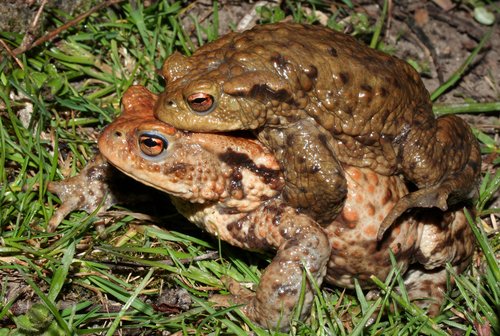
The common toad is often the most visible during this migration. It is stocky, brown, with skin covered in small warts, and large eyes with golden or coppery irises. It walks more than it jumps. Many toads return each year to the pond where they were born, even if that means crossing busy roads.
During the migration, you often see a small male clinging to the back of a much larger female: he holds her firmly and lets himself be carried to the water. Once in the pond, the female lays long jelly strings containing black eggs, wound around the water plants.
In many municipalities in Belgium and France, volunteers organise rescue operations every spring: they set up temporary barriers along the roads, collect the amphibians in buckets and help them across the road safely. Signs sometimes mark these crossing zones. Taking part in such an operation, with a local natural-history society, is an excellent way to discover amphibians from close up, in a supervised and useful setting.
If you are driving on a mild, rainy night at the end of winter near a wood and a pond, slow down sharply: that is often the best help you can give.
Recognising the frogs
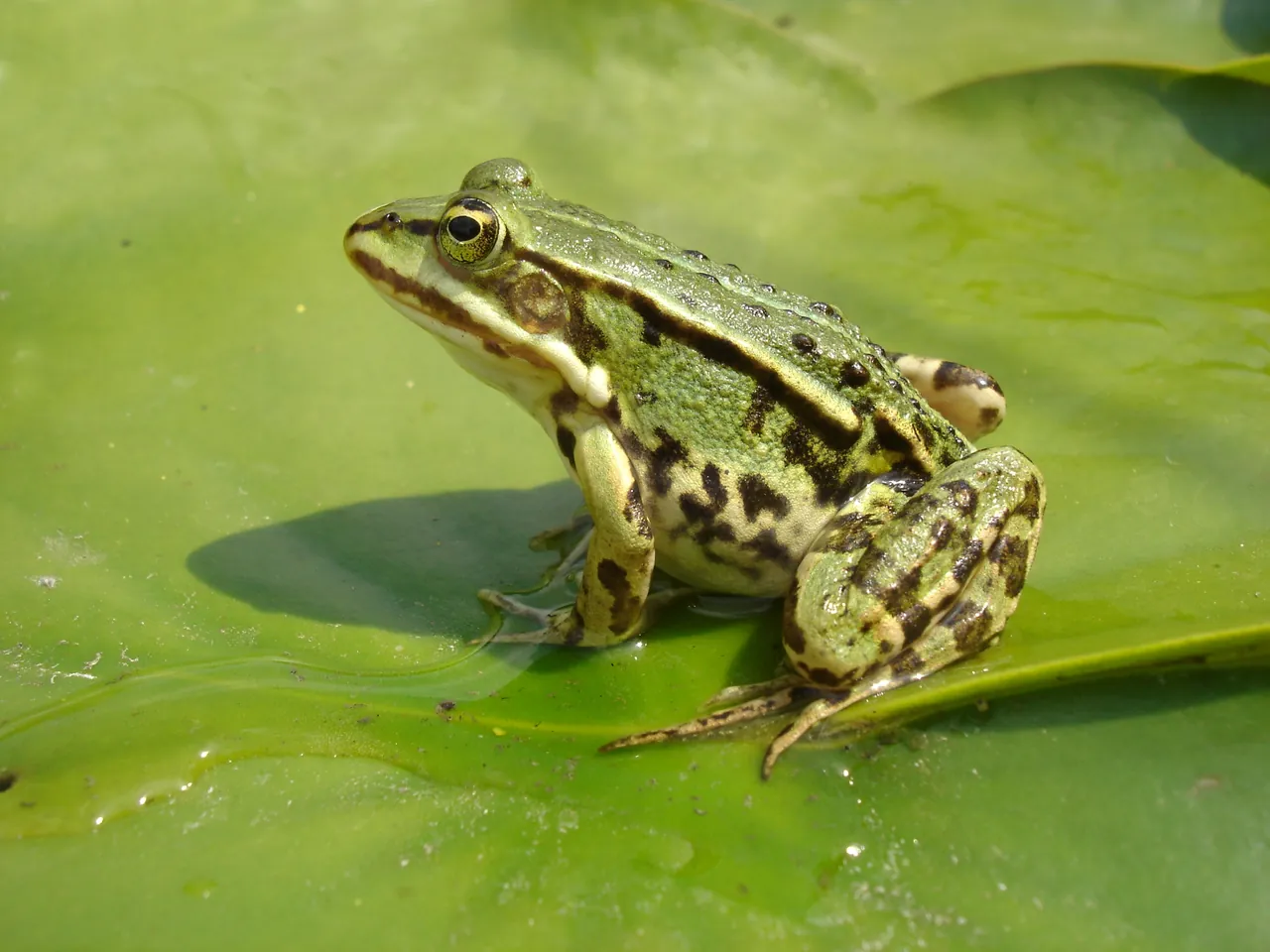
The green frog, as its name suggests, is generally green, sometimes spotted with brown or black, often with a pale line along the back. It lives near water almost all year and likes to bask on the banks or the floating plants, ready to dive at the slightest movement. The males have vocal sacs that swell on each side of the mouth when they call. Their noisy choruses fill the ponds at the end of spring and in summer.
Frogs have smoother skin than the toad and longer hind legs: they move in long jumps. Their spawn forms clumps of small jelly balls, whereas the toad’s is in strings. Looking at the shape of the spawn is therefore a good way to know who has bred in the pond.
Newts, little dragons of the pond
Newts look like small lizards, but they are amphibians, with damp skin and no scales. In spring they join the ponds to breed, and that is the best moment to watch them.
The palmate newt is one of the most widespread. During the breeding season, the male has dark webbed hind feet and a small filament at the tip of the tail, which gives it its name. The female, duller, has neither marked webs nor a filament. The female lays her eggs one by one and wraps them in a leaf of a water plant which she folds carefully.
To see newts, approach the edge of a clear pond gently on a calm day, and watch without moving: you will see them come back up to the surface regularly to breathe, then go down again. At night, a soft lamp aimed at the shallow water often reveals their activity.
The fire salamander, queen of damp nights
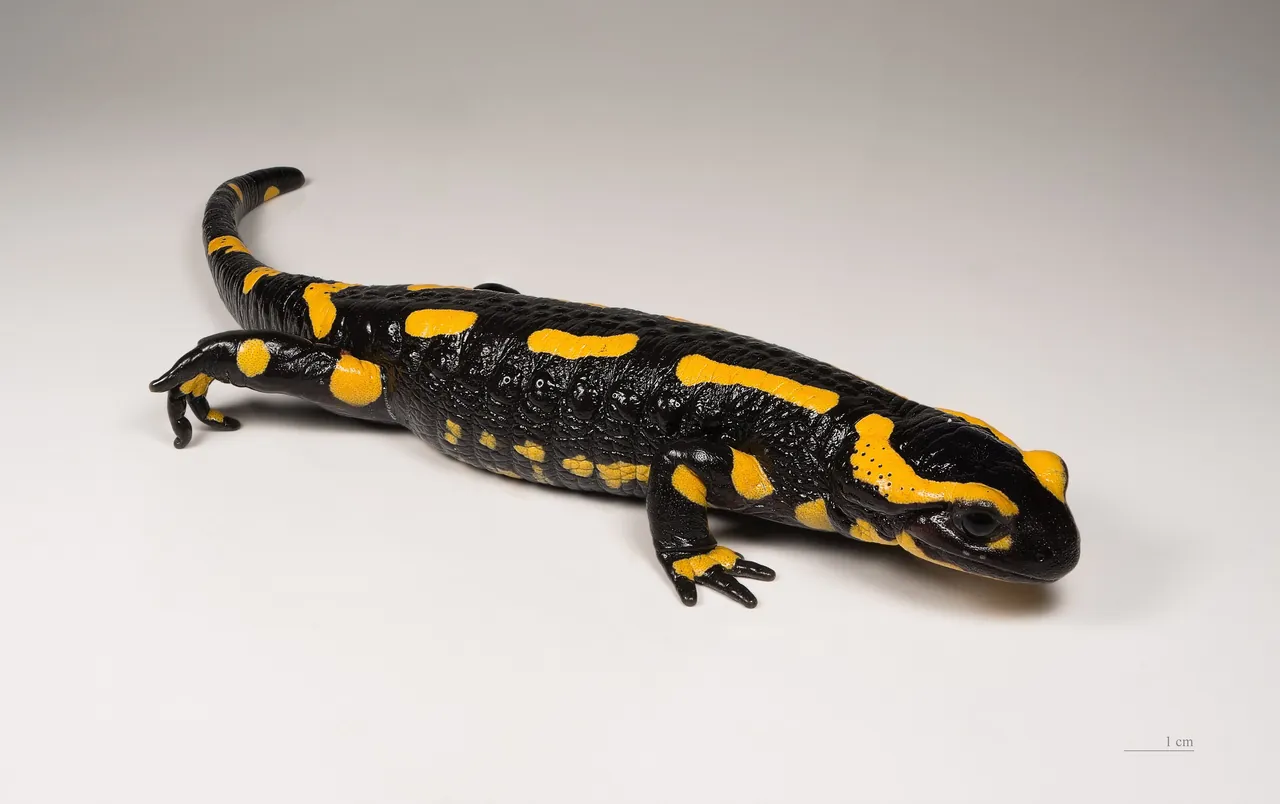
The fire salamander is unmistakable, with its black coat and its bright yellow spots. It lives mainly in damp deciduous woods, often near streams, and comes out mainly at night, especially in the rain. By day it hides under stumps, stones or moss.
Unlike most amphibians, the female does not lay eggs in a pond: she deposits larvae that are already formed in cool streams or small springs. A slow woodland walk, with a lamp, on an evening of gentle rain, is the best chance of meeting one. Watch carefully where you walk on the path.
Tadpoles and larvae: life in the pond
Through the spring, the eggs hatch. Tadpoles of frogs and toads grow, feed, develop their hind legs, then the front ones, and their tail gradually shrinks. At the end of their metamorphosis, tiny toads or frogs leave the pond, sometimes in great numbers, often in damp weather.
The larvae of newts and salamanders are recognised by their feathery gills on each side of the head. In clear, shallow water you can tell them very well from the bank, staying still. To see them more closely, the best is to join a nature session organised by a society, where naturalists show these larvae properly.
The pond also attracts predators. The grey heron comes to fish for frogs and tadpoles, and the grass snake, a snake harmless to people and a good swimmer, readily hunts amphibians near the water.
Watching without harm: the essential rules
Amphibians have legal protection in Belgium as in France. Do not collect them, do not keep them at home, and do not move eggs, tadpoles or adults from one pond to another. This last point matters: moving animals or water can spread serious diseases that affect amphibians.
Avoid picking them up. Their skin is very permeable and sensitive. If you have to help a toad across a road, wet your hands and make sure they carry no trace of cream, soap or insect repellent, and set it down on the other side, in the direction it was going.
At the edge of ponds, stay on the bank, do not trample the vegetation, do not throw anything into the water. Goldfish and other fish introduced into a small pond eat the eggs and the larvae: a pond without fish is much more favourable to amphibians.
Making a pond in the garden
If you have a garden, digging a small pond is one of the best things you can do for biodiversity. Choose a spot that is partly sunny, plan gently sloping banks so that animals can get in and out, plant local water plants and do not put fish in it. Do not go and fetch amphibians from elsewhere: let them come by themselves. Often, by the first or second spring, the first newts and frogs settle in.
A pond, even a small one, also attracts dragonflies, damselflies, birds that come to drink and hedgehogs. It is a wonderful watching post throughout the year.
In AnimalDex
The common toad, the green frog and the palmate newt are common species in the catalogue, and the fire salamander is classed as rare. Photograph them where they are, without handling them: a photo taken from the bank, sharp and respectful, is enough for your collection.