
Animals of the North Sea coast: beach, shore, sea walls and dunes
AnimalDex · 8 October 2026
Seals, gulls, cormorants, crabs, mussels and starfish: what to watch on the Belgian coast and the Opal Coast, at low tide and from the sea walls.
A coast more alive than it looks
The Belgian coast and that of northern France, from the Dutch border to the Somme bay, are often associated with sea walls, beach huts and wind. You imagine less easily that they shelter a rich fauna that is easy to watch. Yet between the sandy beaches, the groynes, the dunes, the estuaries and the harbours, the opportunities are many: seals at rest, seabirds, small crabs, shellfish, starfish and jellyfish.
The advantage of the coast is that you can watch it in every season. Summer brings the holidays and the shore to explore as a family. Autumn and winter offer quieter beaches, superb light and many birds that come to spend the hard season by the sea.
Understanding the tide before you set off
The North Sea and the Channel have large tides. About twice a day, the sea retreats and uncovers a wide band of sand, mud and rocks: the shore. That is where most of the life to watch is found. Checking the tide times before any outing is therefore essential, both to make the most of low tide and for your safety.
The sea sometimes comes back faster than you think, especially on very flat beaches and in bays, where it can go around a sandbank and cut walkers off. Start your exploration by following the sea as it goes out, keep an eye on the time, and return to the top of the beach well before the rising tide. In bays and estuaries, ask local guides, and do not venture alone onto distant sandbanks.
Seals: a spectacle from a distance
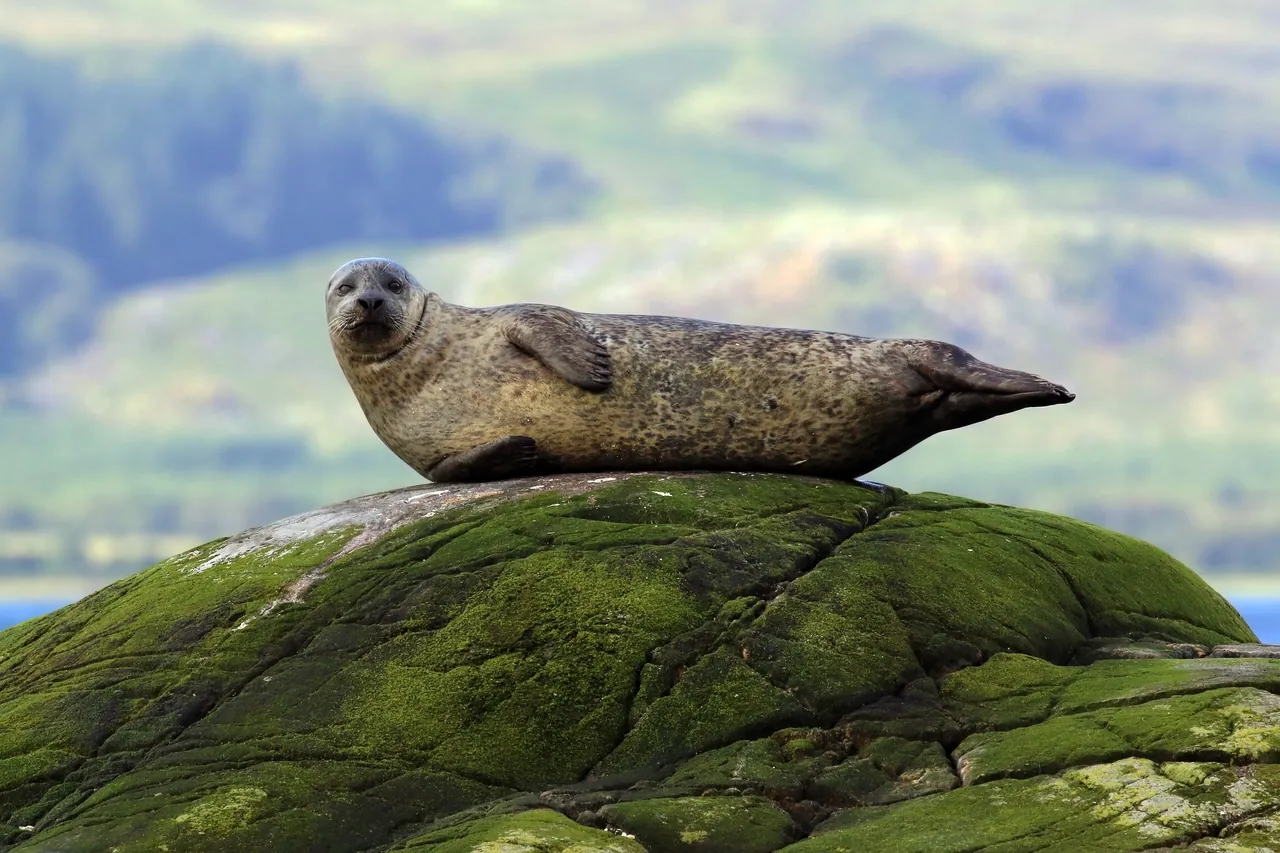
Two species of seal frequent our coasts: the harbour seal and the grey seal. The harbour seal is the smaller, with a round head and a short muzzle that give it a dog-like look. The grey seal is larger, with a longer head and a straight profile, especially in the males.
The Somme bay is one of the best-known sites for watching them: at low tide they rest on the sandbanks. A seal may also rest on a beach of the Belgian coast or the Opal Coast. In that case it is generally neither ill nor abandoned: it is resting, quite simply, and that rest is vital for it.
The rules are very clear. Keep a great distance, enough that the seal does not lift its head and start watching you with alarm. Do not touch it, do not put it back in the water, do not feed it, and hold your dog firmly on a lead, far from it. If a seal seems injured, or if a youngster is alone and no longer moves for a long time, tell the local authorities or a centre specialised in marine mammals, who will know what to do. In the Somme bay, outings led by guides let you watch them in good conditions, with binoculars or a telescope.
Birds of the beach and the sea walls
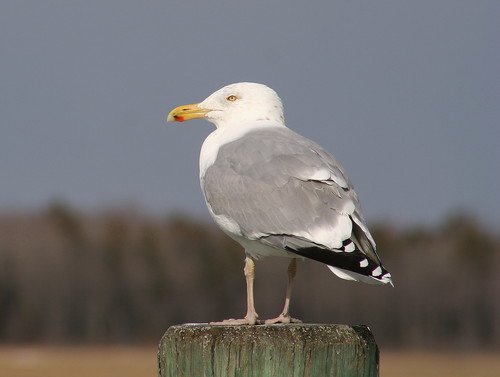
The herring gull is the large white and grey bird of seaside resorts, with a yellow bill bearing a red spot. The young are mottled brown for several years, which causes plenty of confusion. Gulls are intelligent and opportunistic: never feed them, and keep an eye on your chips or your waffle.
The black-headed gull is smaller and slimmer, with a dark red bill and legs. In spring and summer it wears a chocolate-brown hood. In winter that hood disappears and only a small dark spot remains behind the eye. The AnimalDex guide on similar species explains how to tell it apart from the gull.
The great cormorant, a large dark bird with a long neck, dives to fish in harbours and along the sea walls. You recognise it easily when it stands with its wings spread, to dry them in the sun.
In quieter areas, estuaries, nature reserves and salt meadows, you can watch the little egret, a small all-white heron with a black bill and black legs ending in yellow feet, and sometimes the Eurasian spoonbill, recognisable by its flattened, spoon-shaped bill which it sweeps from side to side in shallow water to feed. These sites call for a discreet approach, from the paths and the prepared hides.
Life on the shore
At low tide, the groynes, the breakwaters and the pillars covered in seaweed are colonised by clusters of common mussels, blue-black, fixed by fine threads. Small crabs and winkles often hide among them.
The shore crab is the most common crab of our beaches. Its shell varies from green to brown or orange. It hides under stones, in rock pools and under seaweed. You can watch it scuttle sideways, but if you lift a stone to look at it, put it back gently exactly as it was, because many animals live underneath.
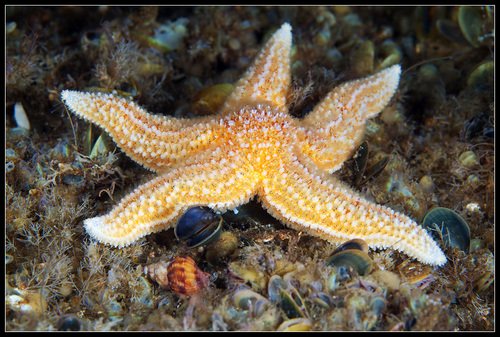
The common starfish, often orange, with five arms, is found in the pools, on the mussel beds it feeds on, or washed up on the sand after a storm. If you find a live one in a pool, leave it in the water.
The strandline, a natural museum
The strandline is the line of natural debris left by the tide at the top of the beach: seaweed, shells, cuttlebones, feathers, empty crabs. It is a real natural museum, ideal for children. You sometimes also find small dry black capsules, with four points: these are the egg cases of rays, sometimes called “mermaid’s purses”.
Jellyfish wash up there too, especially in summer. The common jellyfish, translucent, is recognised by the four coloured rings visible in the centre of its bell. Look at them without touching them: even washed up, some jellyfish can still sting, and it is hard for a beginner to know which one is harmless.
The strandline plays an important role: it feeds many small animals, which in turn feed birds, and it helps to hold the sand at the foot of the dunes. You look at it, you rummage a little, but you leave it in place.
The dunes, a fragile habitat
The dunes that border the coast form a precious and fragile natural habitat. The sand is held by adapted plants, whose roots are easily damaged by trampling. Many dunes are protected and can be reached only by marked paths. Respect these paths, the fences and the closed areas, notably during the birds’ nesting period. Dogs must be kept on a lead there, where they are allowed.
Watching well on the coast
Take binoculars: they are the essential tool for seals and birds, which often stay far away. Wind and sand are hard on equipment: keep your phone in a closed pocket and wipe the lens before each photo. Coastal light is often very strong. Avoid the middle of the day and favour the morning or the end of the day, with the sun at your back.
Do not collect live animals to take home. A bucket of seawater to watch a crab or a shrimp for a few minutes, then put them back exactly where you found them, is a good activity for children. Then it is time for the photo and the notebook.
In AnimalDex
The coast offers fine species of the “Sea” habitat: gulls, black-headed gulls, crabs, mussels and starfish are common in the game, the harbour seal is rare and the grey seal is classed as legendary. You do not need to get close: a photo taken from far away, with the zoom, is enough if the clue on the card can be seen.