
How to identify a garden bird
AnimalDex · 26 September 2026
A field method to name garden birds without trusting a single colour, including the usual mix-ups in European parks.
Why the garden misleads
The garden is the best classroom and the least honest one. Birds are close, used to people, often on the ground or on a feeder. You think you see them well, then you misname them because you kept a colour and not a structure. AnimalDex asks for a photo of a real animal and a confirmation. This guide says what to look at before you press the button, so the card matches the bird.
Start with size against a fixed object: a brick, a pot, the feeder. A robin is small and round. A blackbird is clearly larger, with a long tail. A crow is another scale again. Without that scale, backlight turns a sparrow into a “small raptor” and a starling into a blackbird.
Morning light yellows bellies. Shade under a yew blackens a chaffinch. Note structure before hue: bill shape, tail length, posture. Colour comes after, as a check, not as the first name.
Bill, tail, legs
A fine pointed bill fits insects and soft seeds. A short conical bill is a seed-eater: house sparrow, chaffinch. A frankly yellow, fairly long bill on a black bird on the ground points to a male blackbird. The female blackbird is brown, not black, and that is the garden’s first mix-up.
Judge the tail as the bird takes off. The robin’s tail is rather short and sometimes cocked. The magpie’s tail is very long. A starling has a short tail and triangular wings, and often flies in a tight group. A blackbird flies low, fairly straight, into a hedge.
Legs show at the feeder. Tits hang upside down. The sparrow sits more upright and pecks on the ground under the feeder as much as on it. The chaffinch often stays on the ground, a little aside from the sparrows, and the male shows a bluish crown and pale wing bars in good light.
Five birds to know properly
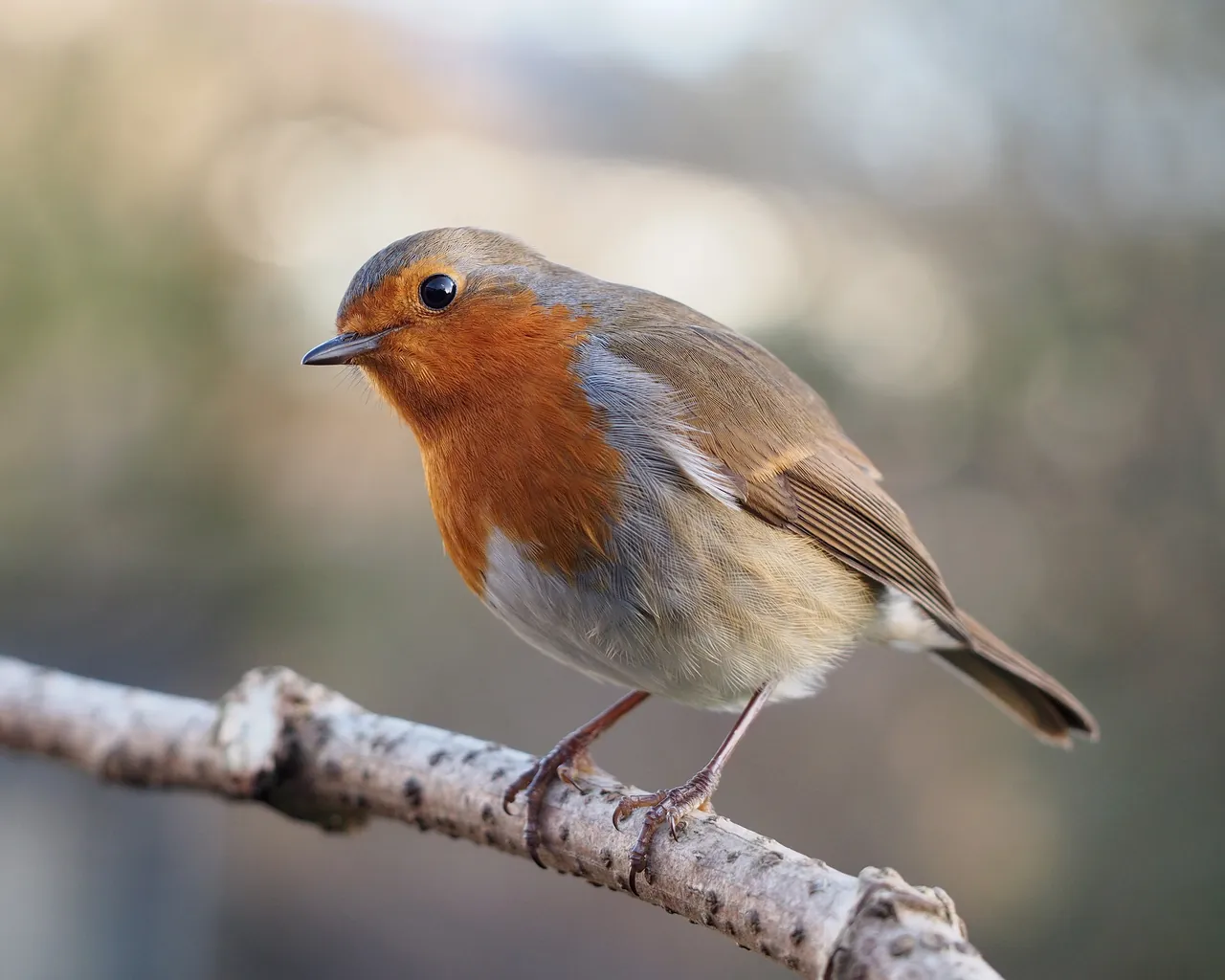
The European robin has an orange face and breast edged with grey. It has no white eyebrow. It sings almost all year, including winter, from a low perch. It follows the gardener because digging turns up worms, not because it is tame. Do not feed it from the hand for a photo.
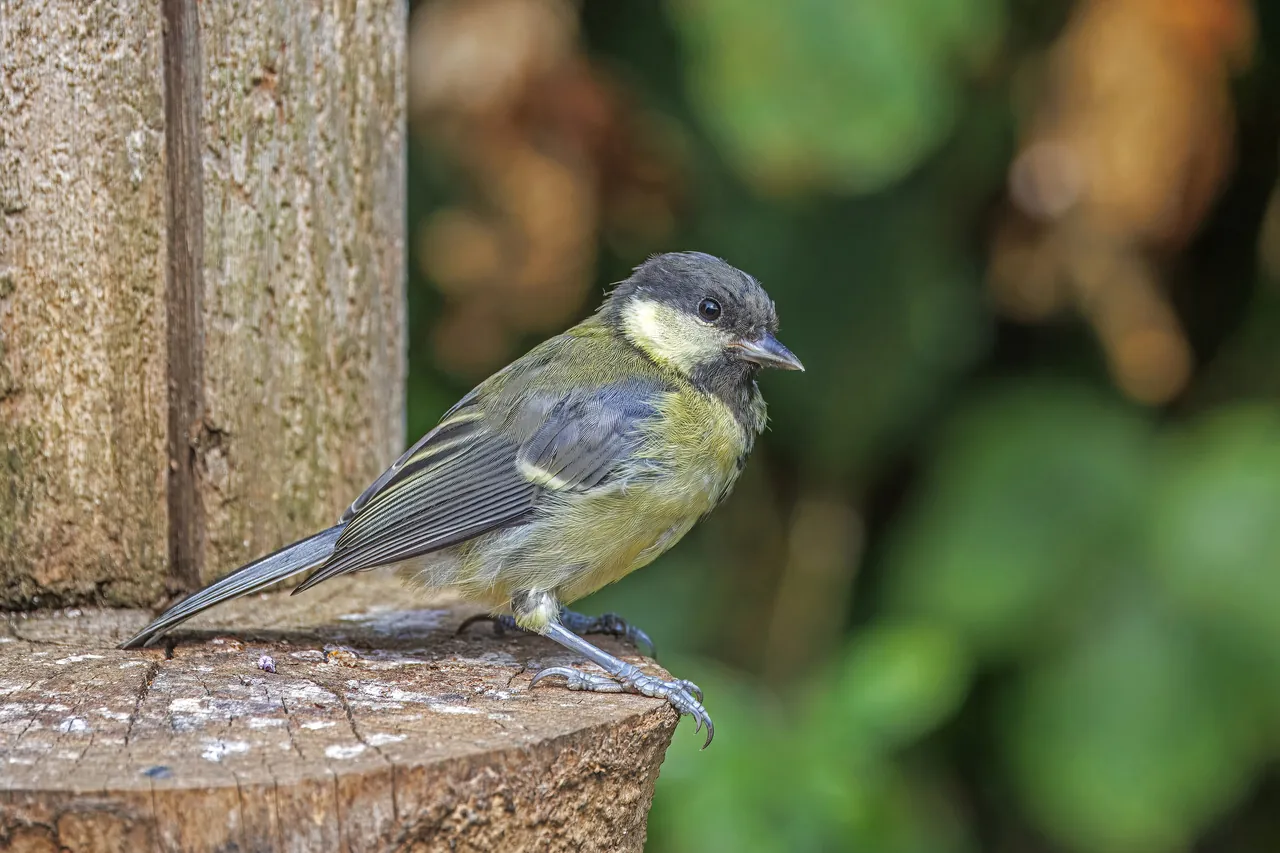
The great tit is the large garden tit: yellow belly, black stripe down the belly, black head and white cheeks. The stripe is often wider on the male. It comes to fat balls and sunflower seed. It is not the blue tit.
The blue tit is smaller, with a blue crown, a dark line through the eye and a yellow belly without a heavy black tie. It is more nervous, often high in the buds. If you hesitate, look at the head. Both cards exist in the catalogue, and mixing them spoils the collection.
The house sparrow has a conical bill, a streaked brown back, and the male shows a black bib and a grey crown. The female is plainer, with a pale eyebrow. It lives in flocks, chatters, and stays tied to houses. A lone brown bird on the ground with a finer bill is usually not a sparrow.
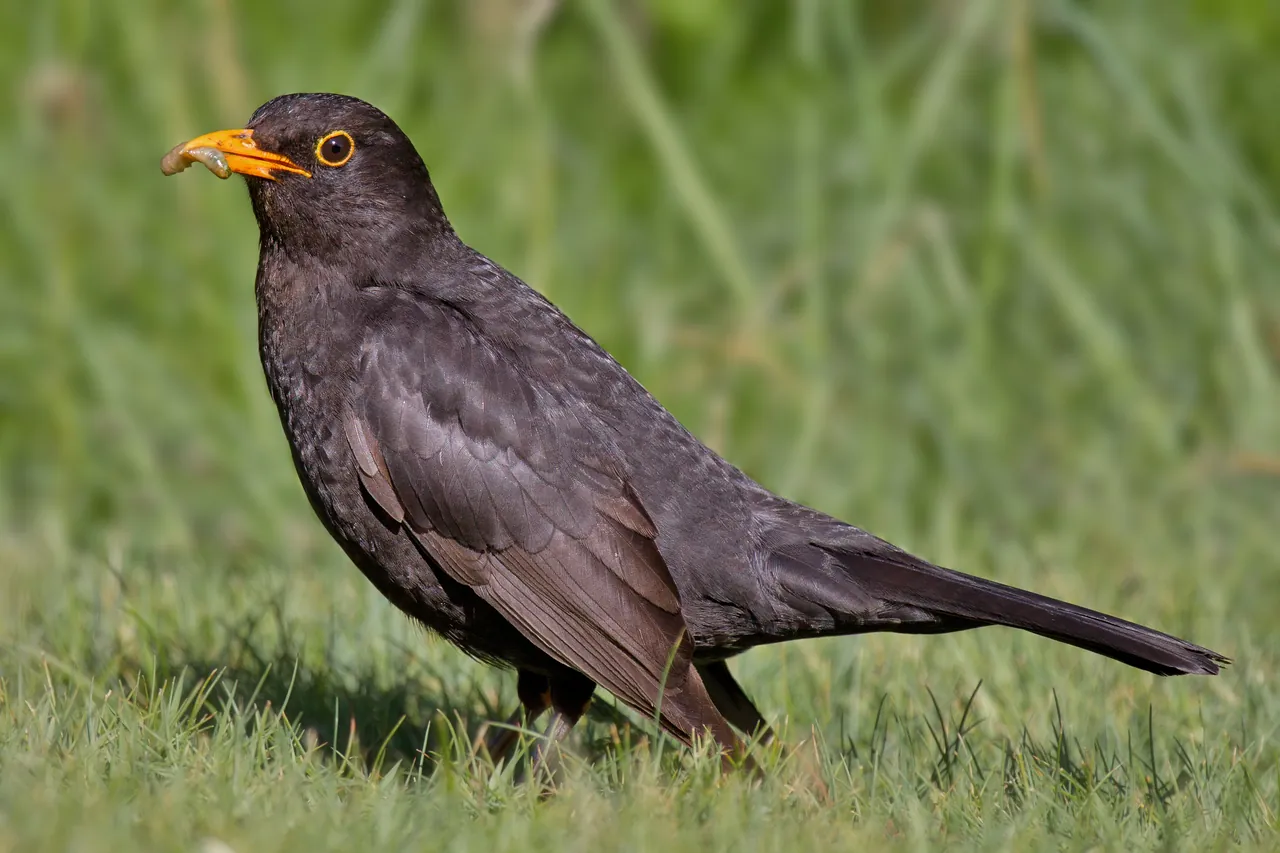
The male blackbird is black with a yellow or orange bill and eye-ring. The female is dark brown, the breast slightly spotted, the bill less yellow. Both feed on the ground, hop, stop, tilt the head. A glossy black bird in a group, with a dark bill and pale spots in winter, is more likely a starling.
Song, season, and what not to conclude
Song helps when the photo is average. The blackbird has a leisurely fluted phrase, often late in the day from a roof. The robin runs bright liquid notes. The great tit repeats a fairly metallic phrase. The chaffinch has a phrase that speeds up and ends in a flourish. Two songs you really know beat ten guessed names.
Season changes the garden. In spring, males sing and hold a corner. In summer, young birds are dull: a young blackbird is spotted brown and looks like a thrush. In autumn, feeders gather tits, sparrows, chaffinches and sometimes greenfinches. In winter, the starling wears pale spots that wear off toward spring. A game card that ignores the date is wrong more often.
Do not decide that a bird “does not live here” after one ten-minute visit. Come back at the same hour two days running, then at another hour. The robin sings early. Sparrows are noisy in mid-morning. Blackbirds are out a lot in late afternoon. AnimalDex lists these species as common in the game because they are reachable, not because they are dull.
A useful photo, without disturbance
For the collection, frame wide first: the bird and the hedge, or the bird and the feeder, so the habitat shows. Only then a tighter frame if the bird keeps feeding or singing. If it flies, you were too close. Step back and wait. A noisy digital zoom is better than an approach that empties the garden.
Do not play calls from a phone pushed into the hedge. Do not move a feeder against a window to force a pose. Window strikes kill garden birds. If you want to see them, keep the feeder away from glass, with a shrub as a stop.
When the app suggests a name, compare it with the card: tie, blue crown, yellow bill, bib, magpie tail. If two species still fit, do not confirm. An accurate collection teaches more than a full one. The links at the bottom of this guide open the species mentioned here, with the scientific name and the mix-ups already written on each card.
What this guide does not do
It does not replace a paper guide or a database such as INPN for France. It does not give a population figure, an invented IUCN status, or permission to approach a nest. Hedge, ivy and box nests are watched from a distance. A flash photo of an occupied entrance hole does not belong in AnimalDex.
AnimalDex (animaldex.fr) is a site and a PWA for photographing real animals and learning their names. It is not animaldex.app, another store application. Catalogue names are the names on the game cards. If a bird in your garden is not listed, do not force it onto a neighbouring card.