
Insects and small creatures of the garden: how to recognise and photograph them
AnimalDex · 8 October 2026
Ladybirds, butterflies, bumblebees, spiders, snails: recognising the small creatures of the garden, avoiding mix-ups and taking close-up photos.
A safari at the height of a blade of grass
People often think of birds and mammals when they talk about watching animals. Yet the greatest animal diversity in a garden is at our feet and in the flowers. Insects, spiders, woodlice, snails: these small creatures are everywhere, easy to approach and fascinating to watch from close up. They are also essential to the garden, whether they pollinate the flowers, recycle dead leaves or feed the birds.
This guide presents the most common small creatures of gardens in Belgium and northern France, the frequent mix-ups, and a few tips for photographing them with a phone, without damaging them.
Ladybirds: not all the same
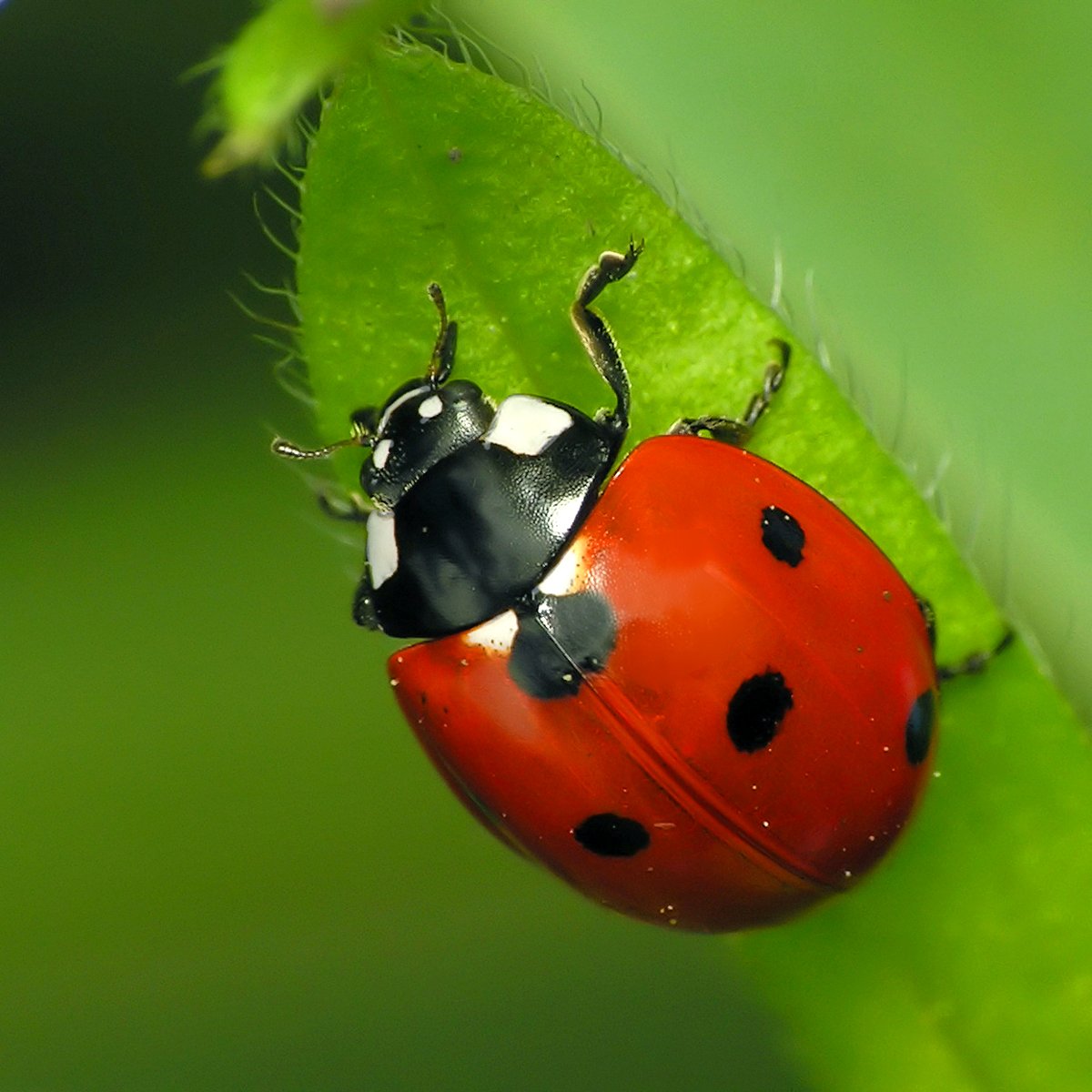
The seven-spot ladybird is the classic ladybird: red wing cases marked with seven black spots, three on each wing case and one shared in the middle, near the head. It feeds mainly on aphids, which makes it a friend of gardeners. Its larvae, elongated, grey and spotted with orange, look nothing like the adult, and many people do not recognise them.
Beware of confusion with the harlequin ladybird, an introduced species that has become very common. It is extremely variable: orange, red or black, with a very different number of spots from one individual to another, from zero to many. It is often a little larger, and frequently shows a black mark in the shape of an M or a W on the white pronotum, the part between the head and the wing cases. Before you name a ladybird, count the spots and look carefully at that part.
Garden butterflies
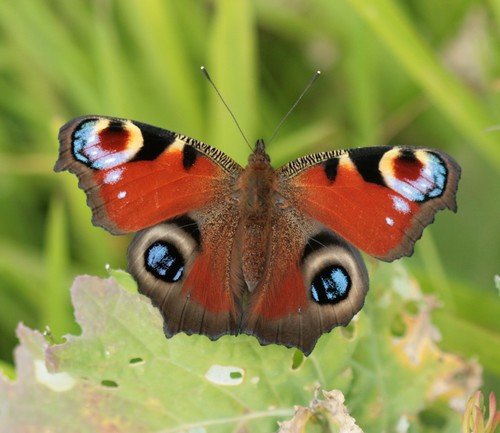
The peacock butterfly is easy to recognise: its brick-red wings carry four large eye-spots, blue, yellow and black. When it folds its wings, it becomes almost black and blends with the bark. Its black caterpillars live in groups on nettles.
The red admiral has black wings barred with orange-red bands, with white spots toward the tip of the forewings. You often see it late in the season, on ivy flowers or fallen fruit. Like the peacock, it depends in large part on nettles for its caterpillars: leaving a patch of nettles at the bottom of the garden helps these two butterflies.
The small white is a white butterfly, with black tips on the forewings and, in the female, extra black spots. Its caterpillars feed on cabbages and related plants, which makes it less popular with gardeners. Several white butterflies look very much alike: a sharp photo of the wings, upper side and underside if possible, helps with identification.
Bees, bumblebees, wasps and hornets
The buff-tailed bumblebee is large, furry, black with two yellow bands and a white tip to the abdomen in the workers. It is among the first insects to forage at the end of winter, and it is very peaceful. You can watch it from very close up when it is foraging, with no danger if it is not disturbed.
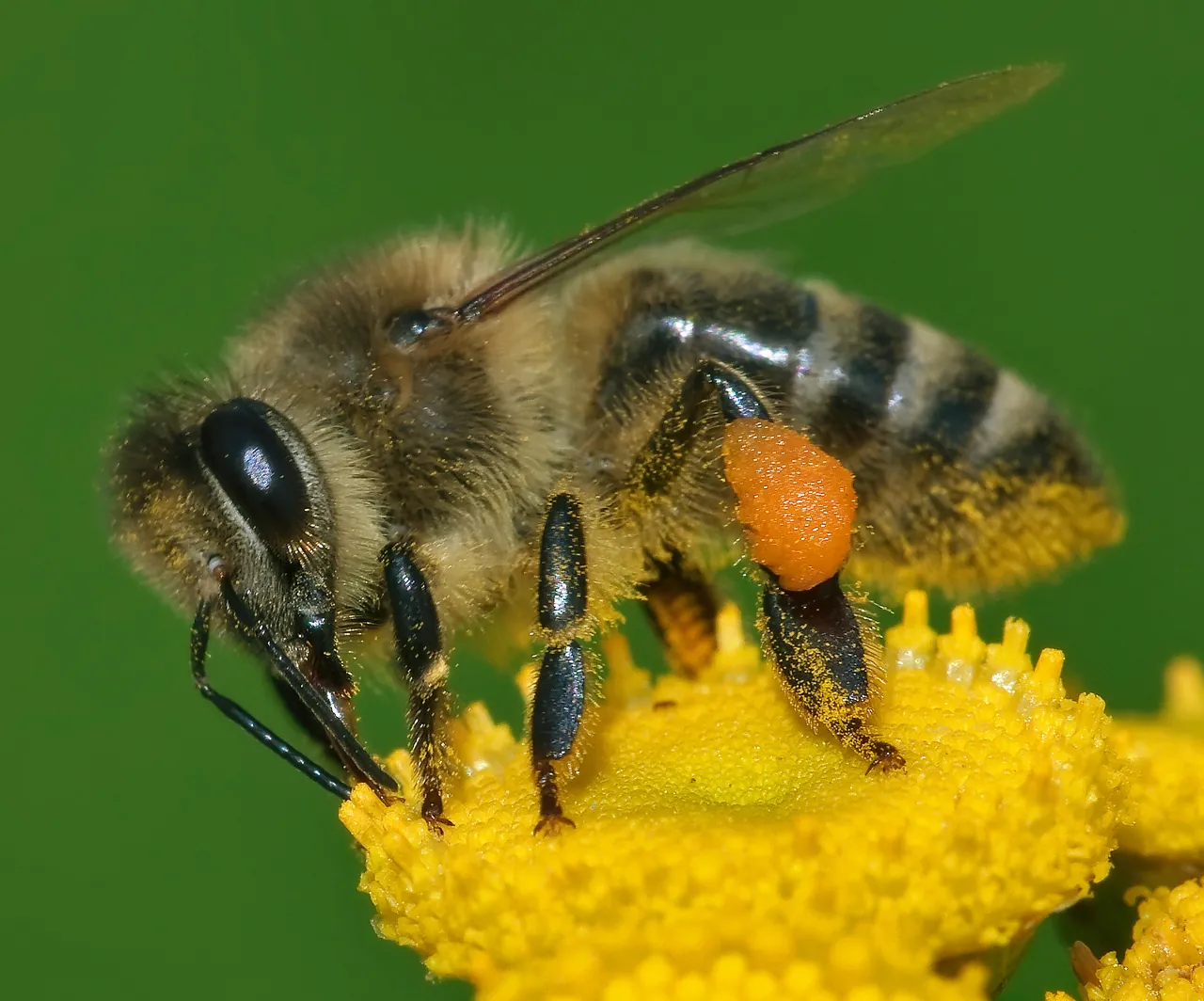
The honey bee is smaller, slimmer, golden brown, less furry than the bumblebee. It lives in a colony in hives kept by beekeepers. It stings only if it feels threatened.
The common wasp has a bright yellow and black body, smooth, with a well-marked “wasp waist”. It is attracted at the end of summer by sugary drinks and ripe fruit. Avoid sudden movements and check your glass before you drink.
The European hornet is the largest of our social wasps, reddish-brown and yellow. Despite its impressive size, it is generally not aggressive away from its nest. It must not be confused with the Asian hornet, an introduced species with a darker, almost black look, and yellow legs. In every case, never approach a wasps’ or hornets’ nest.
Spiders and woodlice
The garden spider, or cross spider, is the most visible spider in the garden at the end of summer and in autumn. Its circular web, stretched between two branches, is a geometric masterpiece. Its round abdomen carries pale patches arranged in a cross. It waits at the centre of its web or hidden in a corner, linked to the web by a thread that warns it of vibrations.
The common woodlouse is not an insect: it is a small terrestrial crustacean, a distant cousin of crabs. It lives under stones, flowerpots and dead wood, where the damp protects it from drying out. The common woodlouse can roll into a ball when disturbed. It plays a precious role by breaking down dead leaves.
Snails, slugs and ants
The garden snail, with its marbled brown shell, comes out mainly after rain and at night. It grazes tender leaves and leaves a shining trail of mucus behind it. Watching its two pairs of tentacles from close up, the long ones carrying the eyes at their tip, is always a strong moment for children.
The leopard slug is a large grey or beige slug, spotted and striped with black. Contrary to a common idea, it is not the enemy of the vegetable patch: it feeds mainly on fungi, on decaying plants, and can even eat other slugs.
The black garden ant lives in colonies under slabs and stones. On some hot, heavy days of summer, the winged ants, males and future queens, fly off in great numbers to mate: this is the swarming, a spectacular event.
Singers of the meadows and hunters of the ponds
The great green bush-cricket is a large bright green insect, with very long antennae, that sings at the end of the day and in the evening in summer, perched in tall grass or bushes. The field cricket, black and stocky, with a large head, sings in front of the entrance to its burrow in sunny meadows in spring and early summer. Both are easier to hear than to see: approach very slowly, they fall silent at the slightest noise.
If your garden has a pond, or if you walk near a pool, you will see dragonflies and damselflies. The broad-bodied chaser has a wide, flattened abdomen, powder blue in the male and brownish-yellow in the female. The large red damselfly is slim and bright red. At rest, most damselflies fold their wings along the body, whereas dragonflies keep them spread.
Photographing small creatures with a phone
Photographing small creatures is ideal for beginners: the subjects are numerous and close. A few tricks make the difference. Early in the morning, when it is still cool, insects are sluggish and move little: it is the best moment to photograph a perched butterfly or a dragonfly. Many phones have a macro mode or a wide-angle lens that can focus from very close. Otherwise, step back a little and crop afterwards, rather than using a digital zoom that is too strong.
Get down to your subject’s height, even if it means lying in the grass. Tap the screen on the eyes or the head for the focus. Avoid letting your shadow fall across the insect, which often makes it flee. Approach slowly, without sudden movements.
And above all, respect your models. Do not catch a butterfly by the wings, do not destroy a web, put stones back, and do not keep small creatures in a jar for more than a few moments. A slightly wild garden, with varied flowers, a woodpile and an unmown corner, will attract far more models than a perfect lawn.
In AnimalDex
The small creatures of the garden are common species in the catalogue and an excellent way to enrich your collection without going far. For species that look alike, such as ladybirds or white butterflies, check the clue on the card against your photo before you confirm.