
Photographing animals at the zoo or wildlife park: glass, mesh and reflections
AnimalDex · 8 October 2026
Making a mesh fence disappear, avoiding reflections on glass, choosing the right moment: tips for photographing zoo animals with a phone.
Why zoo photos so often fail
A wildlife park seems the easiest place in the world to photograph animals: they are there, a few metres away, and they do not run off. Yet on the way home, many visitors find their photos disappointing. A mesh fence in the foreground, a reflection of a red jacket on the glass, an animal asleep at the back of the enclosure, a blurred picture in a dark building.
The good news is that almost all of these problems have a simple solution, even with a phone. This guide completes the general guide “Photographing an animal for AnimalDex” with advice specific to zoos and wildlife parks. It also repeats the essential point: the animals are at home, and the photo must never be taken at their expense.
Preparing the visit
The choice of moment changes everything. Many animals are more active in the morning, at opening time, and in the late afternoon. In the hot hours, the big cats readily sleep in the shade. A slightly cool, cloudy day is often excellent: the animals move more, the light is soft and there are fewer people.
The park map and the information panels often give the times of feeds and talks. Those are moments of activity, but also of a crowd pressed against the barriers. A good strategy is to note the enclosures that interest you most, then come back to them at a quiet moment. Take your time in front of one enclosure rather than running from one to the next: an animal that was asleep may stand up, stretch, come to drink.
Think of the battery. A day of photos, with the screen on and the cold of winter, drains a phone quickly. A light power bank is a good investment.
Making a mesh fence disappear
The mesh is enemy number one. To make it invisible, the principle is to bring the lens close to the mesh and keep the animal far away. The closer the phone is to the wires, and the farther the animal is behind them, the more the mesh becomes blurred, until it almost disappears completely.
In practice, bring your phone as close as possible to the mesh, without going past the safety barriers and without putting your fingers or the device through it. Place the lens in the middle of one opening. Then tap the screen on the animal’s eye or head to force the focus onto it, and not onto the wires. If your phone has several lenses, try the telephoto or a slight optical zoom: a tighter angle of view helps to blur the foreground.
Avoid letting the sun light the mesh directly: shiny wires in the foreground show up much more. Look for a place where the mesh is in the shade, or change angle. If the mesh is too far from you because a barrier stops you getting close to it, accept that, or look for another viewing window onto the enclosure.
Beating reflections on glass
Behind glass, reflections come from the light on your side: the sky, the other visitors, your light-coloured clothes, the phone screen itself. The most effective solution is to almost press the lens against the glass. Rest the edge of the phone gently on the pane, without striking it, and tilt it very slightly so you do not photograph your own reflection.
If you cannot get close enough, shade the phone with your hand or your jacket. Dark clothes reflect much less than bright colours. Choose an angle where nothing luminous sits directly behind you.
The glass is often covered in fingerprints. Find the cleanest area, usually higher up, out of children’s reach. A soft cloth in your pocket lets you wipe your side of the glass if needed.
Flash is to be avoided behind glass: it reflects straight into the picture, and it bothers the animals. Many parks forbid it in some areas anyway. Leave it off for the whole visit.
Dark buildings, vivariums and nocturnal houses
Tropical houses, vivariums and the houses of nocturnal animals are deliberately dim. For a phone, that is a challenge. Steady the device: lean on a rail, tuck your elbows against your body, hold your breath as you press the shutter. The night mode on some phones helps, provided the animal does not move too much.
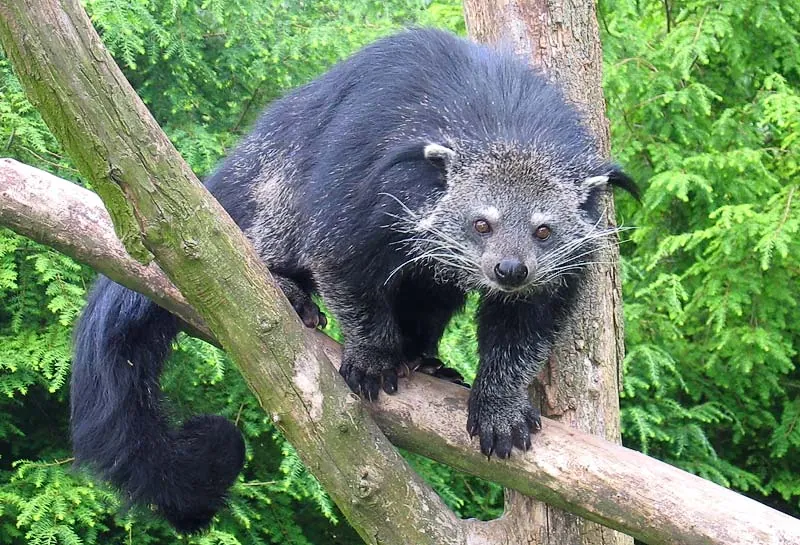
Nocturnal animals, such as the binturong, are shown in a low light that respects their rhythm. Do not try to compensate with a lamp or a flash. A slightly grainy photo of a calm animal is better than a sharp image obtained by disturbing it. Sometimes the best option is simply to look.
Composing a photo that does not look like a prison
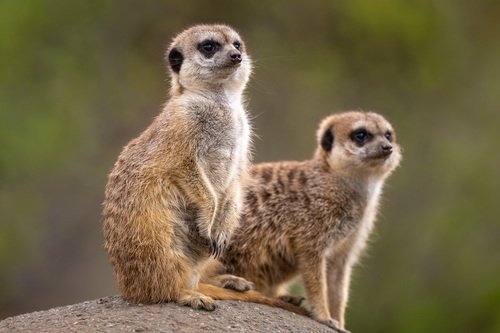
A fine zoo photo avoids reminding you of the zoo. Look for a natural background: foliage, a rock, water. Step a little to one side to take a concrete wall, a plastic feeder or a service door out of the frame. Get down to the animal’s eye level rather than photographing it from above: the picture immediately gains presence. With meerkats or penguins, that means crouching, which children do very naturally.
The gaze matters a great deal. Focus on the nearest eye. Wait for a moment of expression: a gorilla watching, a red panda eating, a giraffe leaning toward a tree. The postures tell you something, and it is also the best way to learn the species’ behaviour.
For birds in an aviary, such as the toco toucan, proceed as with a mesh fence: get close to the wires, wait until the bird perches well behind them, and focus on it. For a group of greater flamingos, a wider photo that shows the group and its pool is often more telling than a close-up.
The rules of respect, always
The rules are simple and not negotiable. Do not tap on the glass. Do not shout and do not make noise so that the animal lifts its head. Do not give any food. Do not cross the safety barriers, even for a few extra centimetres. Respect the areas where photos or flash are forbidden.
Read the panel at each enclosure. It gives the origin of the species, its natural habitat, and often its conservation status and the programmes the park takes part in. It is a precious source of learning, and a good habit to pass on to children. A photo accompanied by what you learned about the animal becomes a real memory.
Finally, keep in mind that the animal is not there for you. If it stays hidden, that is its right. Parks often provide shelters where the animals can get away from view. Coming back later is always possible.
After the visit
Sort your photos the same evening, while the memories are fresh. Keep the best picture of each species, the one where the animal is sharp and recognisable. Note the species name as it appeared on the panel, to avoid mix-ups between similar species, for example between several species of lemurs or flamingos.
A light crop can improve the composition, but avoid heavy retouching that changes the animal’s colours. A faithful colour helps with identification.
In AnimalDex
Animals from wildlife parks have their place in the catalogue, with the habitat “Zoo”, and many are classed as rare or epic. A sharp photo, taken by you while respecting the park’s rules, is enough: check the name on the panel and on the card before you confirm.