
Reading animal tracks and signs in woodland and the countryside
AnimalDex · 8 October 2026
Footprints, droppings, gnawed nuts, pellets, turned earth: learning to read animal tracks and signs in woodland, the park and the countryside.
Seeing the animal… or seeing that it passed
Many wild mammals are discreet, active at night or at dusk, and wary of people. You can walk in the woods for years without meeting a badger. Yet it often passed right there, the night before. Its tracks are on the muddy path, its droppings in a small hole, its sett under the stump.
Learning to read these signs completely changes the way you look at a walk. A simple stroll becomes an investigation, which children enjoy enormously. And it is the best preparation for watching: knowing that a roe deer uses a woodland edge means knowing where to come back at dawn, with patience, perhaps to see it.
Where and when to look
The best surfaces for footprints are fine mud, damp sand and fresh snow. The edges of puddles, forest tracks after rain, stream banks and the edges of ploughed fields are open books. In the morning, the night’s tracks are still sharp. Raking light, early or late in the day, casts shadows that reveal the relief of the prints, much better than the midday sun.
In winter, after a fall of snow, the countryside is covered in trails. It is the ideal time to begin: you see not only the footprints, but also the animal’s route, its stops, its turnings.
To keep a useful record, photograph the print straight from above, with an object for scale beside it: a key, a coin, a pencil. Note the place in general terms and the kind of habitat.
Footprints of common mammals
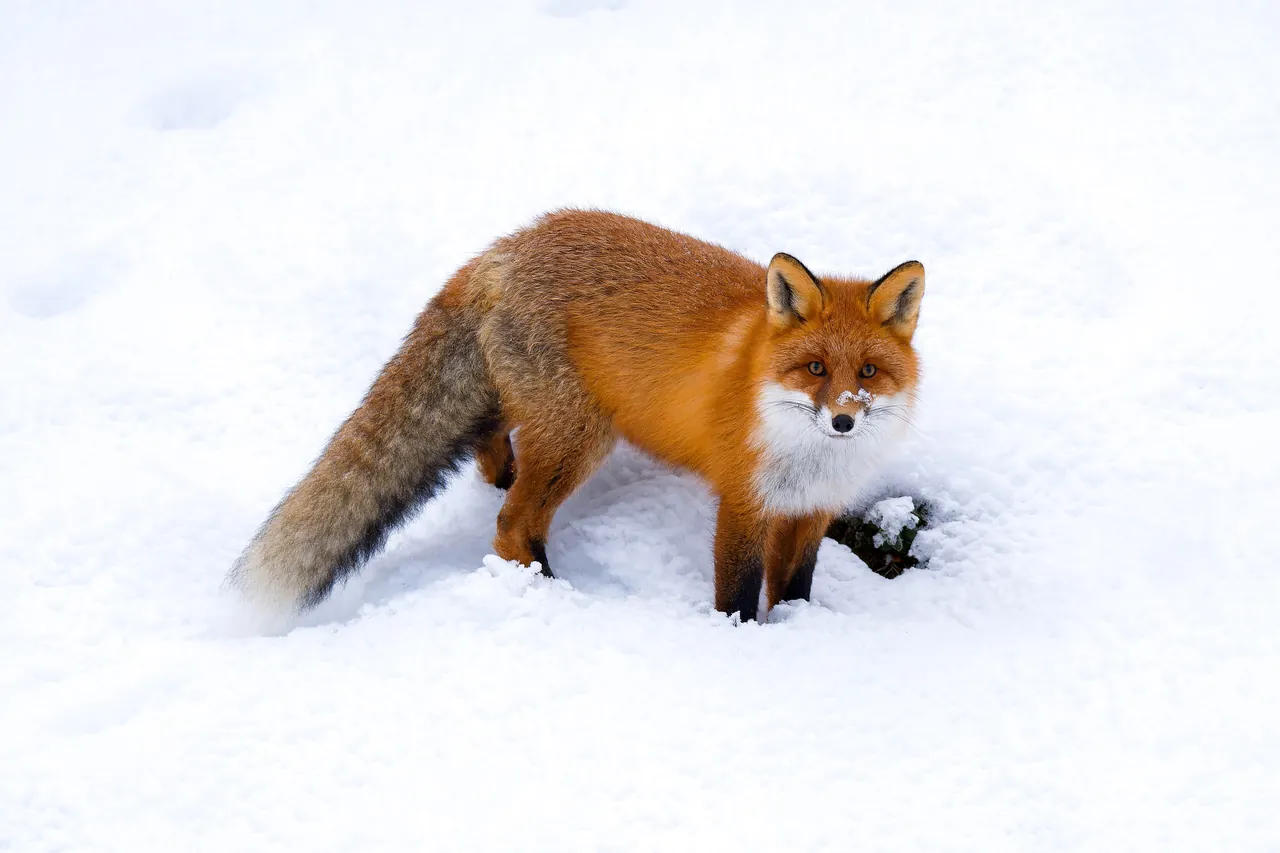
The red fox leaves an oval print, longer than it is wide, with four toes and claws that are often visible. The two middle toes sit well ahead of the side toes, which leaves a free space between the pads. Its trail is often very straight, the hind feet placed in the tracks of the front feet, as if it were walking on a wire. A dog print of the same size is generally rounder, with more widely spread toes, and a dog out for a walk zigzags much more.
The domestic cat leaves a round print, with four toes, and no claw marks, because it retracts them as it walks. That is the best clue for telling it apart from a small fox.
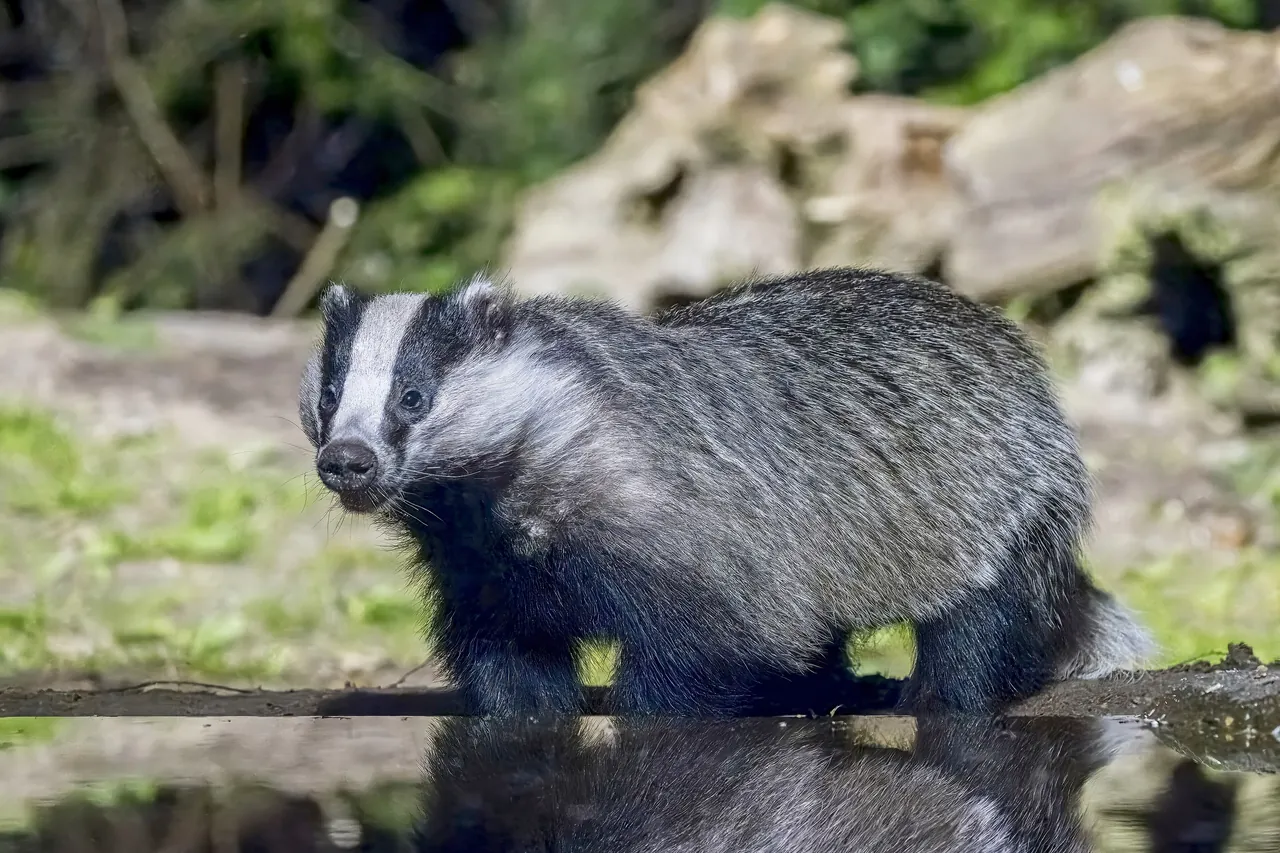
The badger has a very recognisable print: five toes lined up in front of a broad pad, and long claws well marked at the front. It looks like a small bear’s hand.
The roe deer leaves two pointed, narrow hooves, in the shape of an elongated heart. The wild boar also marks two hooves, broader and rounder, and often, behind them, two extra small marks left by the dewclaws, especially in soft ground. Those two points set back are a good sign of wild boar.
The rabbit and the brown hare move in bounds. Their trail forms a repeated pattern: the two large hind feet land in front of the two small front feet. The hare’s tracks are larger and its bounds much longer.
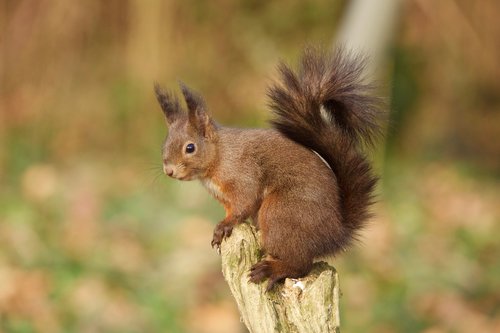
The red squirrel also moves in bounds, with a pattern close to the rabbit’s in miniature, but its trail almost always leads from one tree to another.
Leftovers of a meal: nuts, cones and feathers
Gnawed nuts and cones give away who ate them. An adult red squirrel often splits hazelnuts into two neat halves. Small rodents such as the wood mouse rather pierce a round hole in the shell, with fine tooth marks on the edge. On a spruce or pine cone, the squirrel tears off the scales and leaves a ragged core, with scales scattered at the foot of the tree. The great spotted woodpecker, for its part, wedges cones in a crack in the bark to hammer them: you sometimes find dozens of damaged cones at the foot of its “workshop”.
A pile of feathers on the ground also tells a story. When a bird of prey plucks its prey, the feathers are pulled out whole and the quill is intact. When a mammal such as the fox or the beech marten tackles a bird, it often cuts the feathers with its teeth: the quills are sliced or chewed.
Droppings, pellets and latrines
Droppings are precious clues, to be looked at with the eyes and a stick, never with the hands. Those of the fox are elongated, twisted, pointed at the end, and often contain hair, bones or fruit pips. The fox deposits them readily in plain sight, on a stone, a tussock or in the middle of a path: it is a way of marking its territory.
The badger digs small shallow holes where it leaves its droppings, near its sett or at the edge of its territory: these are its latrines. Finding one suggests that a sett is probably not far away.
The roe deer leaves small piles of round or oval droppings, dark and shiny when they are fresh. The rabbit leaves small dry round pellets, often in a group on a little mound.
Pellets are not droppings. Nocturnal birds of prey such as the tawny owl swallow their prey almost whole and later cough up, as a pellet, the fur and bones they do not digest. You find them at the foot of the trees where they rest. Once dry, they can be taken apart with tweezers, ideally with gloves, to find the small skulls of rodents: a fascinating activity to do as a family or in class.
Setts, runs and marks on trees
A badger sett is often made of several large entrances, with big piles of dug-out earth in front, sometimes mixed with old bedding of dry grass that the badger renews. A fox earth entrance is often less tidy and may be surrounded by leftovers of meals. In both cases, watch from a distance and never settle in front of the entrance.
Runs are small paths worn by the repeated passage of animals through long grass or under a hedge. A low gap under a fence, with a few hairs caught on the barbed wire, marks a regular crossing.
On trees, several signs are easy to recognise. The male roe deer rubs his antlers against young stems, which strips the bark at a fairly low height: these are fraying marks. The wild boar rubs against trunks after its mud bath, leaving dried earth and hairs on the bark. Beside the water, a trunk cut into a pencil shape, with large chips at the foot, shows that the European beaver is established there.
On the ground, molehills lined up in a meadow show the tunnels of the European mole, while areas of earth turned over deeply, as if ploughed, are the mark of wild boar looking for food.
The tracker’s good habits
Reading tracks does not mean disturbing the animals. Stay on the paths as much as possible: a run can be read very well from the trail. Do not settle beside a sett, do not move the branches, do not dig. Do not pick up droppings with bare hands: some can carry parasites. Pellets are handled with gloves or tweezers, and you wash your hands afterwards.
Do not publish the precise location of a sett or a nest. A badger sett known to everyone risks being disturbed.
Finally, accept that you will not identify everything. A half-faded print can belong to several animals. Note it as “probable”, come back another day, look for other signs around. It is the accumulation of signs, more than a single track, that lets you conclude.
In AnimalDex
Tracks do not replace a photo of a real animal, but they tell you where to look. Spotting the signs of a fox, a badger or a roe deer, then coming back at dawn to the same place, at a good distance, is often the best way to add a rare species to your collection.